








Key Takeaways
Hair loss can be caused by many factors, including inherited genetics, stress and inflammatory disorders. However, the importance of a balanced diet of essential nutrients and vitamins for maintaining healthy hair is sometimes overlooked.
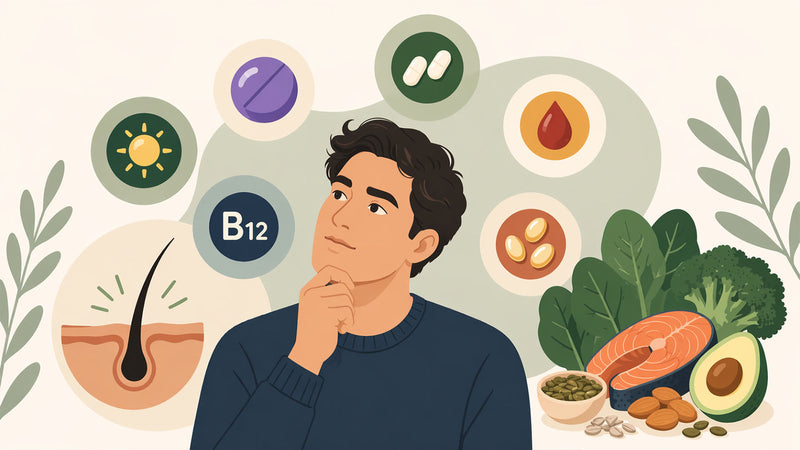
Vitamins and minerals play a key role in the hair growth cycle and scalp health, many of which we get from our diet. Some factors can cause a vitamin deficiency, which may contribute to hair thinning or loss.
We've compiled clinical research and insights to explore which vitamin deficiency may cause hair loss and the support available to you.
What Role Do Vitamins Play in the Hair Growth Cycle?
Vitamins may support the hair growth cycle in several ways. They may aid follicle health, support protein synthesis and keratin production, all of which are needed to maintain the growth cycle.
The hair growth cycle has 3 stages: the anagen growth phase, the catagen transition phase and the telogen resting/shedding phase. The cycle needs a balance of hormones, vitamins and minerals for each phase to maintain healthy hair growth.
A 2024 study into vitamins as key moderators for hair growth showed these essential nutrients may play a part in the hair growth cycle:
| Nutrient | What it does for hair | How it works in your body |
|---|---|---|
| Vitamin D | May help hairs stay in the growing stage for longer and may "wake up" sleepy follicles. | May attach to receptors on hair-root cells that tell them to grow instead of rest. |
| Biotin (B7) | May help in keratin production to build strong, thick hair strands. | It's used to make keratin (the main hair protein), so hair grows out stronger and less breakable. |
| Vitamin A | Helps to "switch on" hair roots and the anagen growth phase. May also keep your scalp from getting too dry. | It turns on stem cells in the follicle so new hairs start, and helps produce natural scalp oils. Both a vitamin A deficiency and excessively high levels may lead to hair loss. These roles are based on biological mechanisms and animal studies; human data are still limited. |
| Vitamin C | Helps make collagen and improves iron absorption, both of which are important for strong hair. | It's needed to build collagen around the hair to strengthen the shafts. It may also aid oxygen delivery to support root health by boosting how much iron you absorb from food. |
| Vitamin E | Protects hair roots from everyday damage and may support a healthy scalp. | Research shows it may act like a shield (antioxidant) against damage from pollution and stress, and may support good blood flow in the scalp. |
| B vitamins (B3, B12, folate, etc.) | May help hair grow by feeding the roots with oxygen and nutrients. | They help make healthy red blood cells and support energy production, so more oxygen and nutrients reach the follicles. |
| Iron | Helps prevent excessive shedding and keeps hair growth steady. | It's needed to make haemoglobin in red blood cells, which carry oxygen to hair roots; low iron may push more hairs into the shedding stage. Iron is the world's most common nutritional deficiency, but the links between iron deficiency and hair loss often differ between male and female subjects. |
Signs of Vitamin Deficiency
The signs of a vitamin deficiency differ between each nutrient but may include fatigue or poor skin. When it affects your hair health, you may notice:
- Brittle hair that is easy to break.
- Dry hair that was otherwise smooth.
- An increase in your daily hair loss.
- Hair growth is slower than usual.
- Thinning hair across the scalp.
However, it is hard to determine if these symptoms are from nutrient deficiency alone. Always seek a diagnosis from a medical professional.
Vitamin D and Hair Loss
Vitamin D is one of the more widely researched nutrient deficiencies that may affect hair loss. Clinical studies have found that vitamin D may directly influence hair follicles and the growth cycle by attaching to the receptors on hair root cells. This may influence follicle cycling and help normalise anagen–telogen transitions, but it is only one of many factors involved.
We mainly get vitamin D from sun exposure and foods such as oily fish, egg yolks and UV-exposed mushrooms. In New Zealand, vitamin D levels can vary seasonally, and a doctor can test whether supplements are required to meet your daily intake.
If you are worried, a doctor can test you for vitamin D deficiency and assess if supplements are required to hit your daily intake.
Iron Deficiency and Hair Loss
Iron deficiency anemia may contribute to hair loss by preventing follicles from obtaining the oxygen they need to progress through the growth cycle. When ferritin (stored iron) levels are low, our bodies prioritise other organs over hair follicles. This can cause cells to remain in the telogen resting phase, which may lead to excessive shedding or thinning hair.
We mainly get iron from animal foods like red meat and seafood, but we can also get it from lentils, spinach and tofu.
A doctor will test your ferritin levels to determine if you have iron deficiency anemia. Supplements or blood infusions are commonly used to reverse effects and restore levels.
Vitamin B and Hair Health
Studies show that vitamin B2 (riboflavin), B7 (biotin), B9 (folate) and B12 are among the B vitamins that may be associated with hair loss. They play a role in red blood cell production and protein synthesis, which are essential for a healthy hair growth cycle.
In particular, B9 (folate) may support hair follicles in achieving rapid cell turnover during a cycle. Biotin aids keratin production, which is the primary hair protein responsible for making hair less brittle.
While B‑vitamin deficiencies can contribute to hair thinning, supplementation only reliably improves hair when a true deficiency exists.
Solutions for Hair Loss Due to Vitamin Deficiencies
Since we mainly obtain vitamins through our diet, there are many natural ways to support hair growth after a vitamin deficiency. More severe cases might benefit from hair treatments to aid regeneration.
Lifestyle Factors
If you're just beginning to notice signs of hair shedding or thinning, some lifestyle changes could help restore healthy hair:
- Eat a balanced diet to ensure your body receives all essential nutrients for a healthy hair growth cycle. Check the recommended daily intake of vitamins and include plenty of vegetables, proteins, and fibre.
- Get adequate sleep each night. Your body needs rest to repair and produce new cells.
- Incorporate exercise into your routine to boost your metabolism.
- Avoid excessive heat styling if your hair is prone to breakage or shedding.
Supplements
The effectiveness of vitamin supplements for hair regrowth varies, as it's challenging to isolate the effects of a single vitamin. A diverse range of nutrients enables the body to go through growth cycles and regenerate hair cells.
A healthcare professional can help determine whether supplementation is appropriate for your individual needs.
Hair Treatments
If you face ongoing hair loss issues, non-surgical treatments may assist with hair restoration goals. A trichologist can create a personalised plan incorporating the most suitable treatments:
- Growth Factor Therapy: This involves applying key growth factors to the scalp, which may support scalp health and follicle function.
- Platelet-Rich Fibrin (PRF): Utilises your own blood components as part of a treatment plan that may stimulate hair growth and enhance scalp skin health.
- Low-Level Light Therapy: Uses red light technology as part of a broader hair management plan, depending on individual circumstances.
These treatments may be considered as part of an individualised plan. Outcomes vary between individuals, and suitability should be assessed by a qualified practitioner.
Get Support from Gro Clinics
Many cases of hair loss are caused by vitamin deficiencies or other factors. A free consultation with our Auckland hair loss advisors will review your hair goals to develop a tailored plan.
Zoom consultations are also available. Speak to a practitioner to explore suitable options for you.
Frequently Asked Questions
Which foods contain the essential nutrients for healthy hair?
Foods high in protein, healthy fats, and iron-rich plants can help you meet the daily nutrient requirements for healthy hair.
How long does it take for hair to grow back after a B12 deficiency?
The timeline varies depending on whether other underlying conditions, such as thyroid issues, iron deficiency, or genetics, also affect your hair health. Some improvement might be seen after around 3 months, with full results taking approximately 6 to 12 months.
What vitamin promotes the most hair growth?
There isn't a single "best" vitamin for hair growth. A balanced intake of various vitamins is essential.
Can I reverse hair loss caused by a vitamin deficiency?
In cases where a vitamin deficiency is the sole cause of the hair loss, hair health may improve over time once levels are corrected. It can take time for shedding to cease as your body restarts a healthy hair cycle. A full reversal depends on how long the deficiency lasted and whether miniaturisation (as in pattern‑loss) occurred. If other underlying causes are involved, diagnosis and recovery may take longer.
This information is general in nature and does not constitute medical advice. Individual results may vary. A consultation with a qualified healthcare professional is recommended to determine the most appropriate approach for your circumstances.