








Key Takeaways
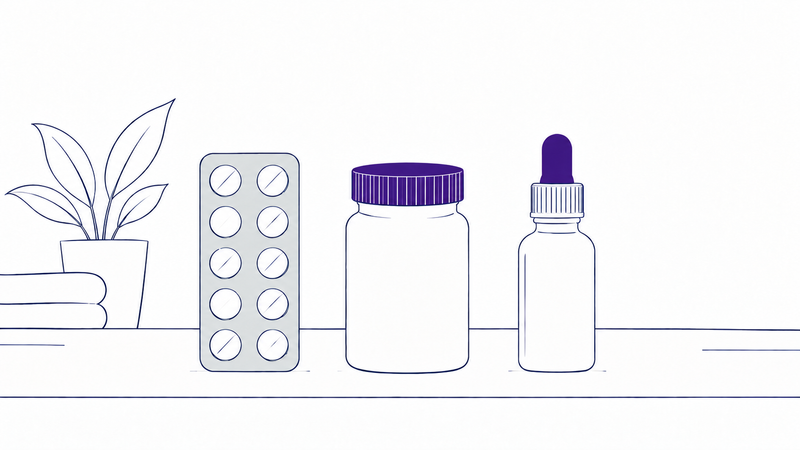
Finasteride, minoxidil and dutasteride are three commonly prescribed medications for multiple different types of hair loss conditions. Finasteride and dutasteride are most commonly taken as a method of blocking hormones that cause hair loss. Minoxidil has a record of use in helping to manage hair thinning by facilitating a more active growth phase.
Exactly which treatment is best for you may vary depending on your age, the state of your hair health, and exactly what condition is causing your hair loss. In this blog, we will outline exactly what each medication is, how it treats hair loss, and the most common benefits and downsides of each.
Note, this information is general in nature and does not constitute medical advice.
What Causes Hair Loss?
Treatable hair loss may be caused by multiple factors, with one of the most common being androgenetic alopecia, which is also known as male or female pattern baldness (1). Male pattern baldness affects up to 80% of men by around age 80, while female pattern baldness affects up to 50% of women. (2)
This condition is a combination of genetic predispositions and increased sensitivity to hormones, most commonly the hormone dihydrotestosterone, better known as DHT.
How is Hair Loss Medication Prescribed?
Typically, hair loss medication is prescribed after a consultation with a registered health practitioner. You can read more about how we assess and treat hair loss before any medication is recommended. Once a registered health practitioner has assessed your hair loss and medical history, they may:
- Look at your hair pattern to identify the source of the hair loss.
- Ask about your medical history, family history and any specific condition that may affect treatment (liver disease, etc).
- Review all your existing medications, supplements or health products you are taking.
From there, they may prescribe a recommended hair loss medication that is suitable for you.
Hair Loss Medications Explained
A registered health practitioner may prescribe specific medications to address your hair loss. These medications may include:
Finasteride
What is Finasteride?
Finasteride is most commonly taken as an oral tablet to treat benign enlarged prostates and male pattern baldness. A topical finasteride solution is also used for hair loss, though this is typically a compounded preparation rather than a registered medicine. (3) At its core, finasteride is a synthetic steroid-derived compound that blocks specific enzymes. It was approved by the FDA for prostate treatment in 1992 and for male pattern hair loss in 1997.
How does Finasteride work?
Finasteride aims to block the conversion of testosterone into DHT within your body by blocking type 2 isozymes. This may reduce the hormone associated with hair loss. With reduced DHT levels, hair follicles may be less affected, and some individuals experience changes in hair thickness over time.
Finasteride results are gradual and vary between individuals. A registered health practitioner can advise on what to expect based on your circumstances.
Finasteride Benefits and Downsides
Benefits of finasteride include:
- May help hair loss: Finasteride has an established history of use in helping to manage hair thinning and, in some individuals, supporting changes in hair density. (4)
- Prostate health: This medication may also be prescribed as a treatment for an enlarged prostate, which may also be related to hair loss.
- Long-term: Finasteride is a long-term medication, though a consultation is recommended to assess individual suitability and monitor for adverse effects.
Potential downsides of finasteride include:
- Long-term usage: Once you have started taking finasteride, you may need to keep taking it indefinitely, or else your hair may return to its previous state.
- Potential side effects: Reduced libido and erectile dysfunction have been reported in roughly 1 in 100 men, with mood changes such as depression reported less commonly. (5)
- Not usable by women: Finasteride is typically not permitted for women due to being less effective for women's hormonal profiles and potentially causing birth defects.
Dutasteride
What is Dutasteride?
Dutasteride is an oral tablet and topical solution similar to finasteride that may block the hormone responsible for prostate growth. It is most commonly taken to treat benign prostatic hyperplasia (BPH).
Some studies suggest dutasteride may reduce DHT levels to a greater extent than finasteride in some individuals, though responses vary. (6) A registered health practitioner can advise on suitability. A dutasteride prescription is only approved for treating the prostate, meaning any hair loss prescription will be an off-label prescription.
How does Dutasteride work?
Dutasteride works similarly to finasteride in that it works by blocking the production of DHT, which is also responsible for causing prostate enlargement. However, unlike finasteride, dutasteride blocks both type 1 and type 2 isozymes. This may result in a more substantial reduction in DHT levels compared to finasteride, though individual responses vary.
Dutasteride Benefits and Downsides
Benefits of dutasteride include:
- Effectiveness: Dutasteride has been found to reduce DHT by a more significant amount compared to finasteride.
- Addresses prostate issues: In addition to blocking DHT, dutasteride may help with symptoms of BPH, such as improving urine flow.
- Flexible dosing: Dutasteride is available in oral capsules or topical solutions, with dosing determined by your practitioner as part of a hair loss management approach.
Potential downsides of dutasteride include:
- Long-term usage: Like finasteride, you may need to take dutasteride indefinitely once you begin using it for hair loss, as the effects associated with dutasteride use are generally considered to diminish after ceasing treatment. (5)
- Side effects: Dutasteride shares many side effects with finasteride, which may include decreased libido, erectile dysfunction and depression, as well as anxiety and brain fog. Individual experiences vary.
- Men only: Similar to finasteride, dutasteride is not typically prescribed to women due to being less effective and focusing more on prostate treatments.
Minoxidil
What is Minoxidil?
Minoxidil is a topical solution and oral tablet taken to assist hair growth. It was originally discovered as an active ingredient in oral blood-pressure medicine that was causing hair growth as a side effect. While available as an oral tablet and topical solution, it is typically applied to the scalp as a foam or liquid when treating hair loss.
How does Minoxidil work?
The exact mechanism of how minoxidil works isn't fully understood. (7) Some studies indicate that minoxidil works by widening blood vessels and opening potassium channels, which increases blood flow and nutrients to hair follicles and extends the growth phase of hair.
Minoxidil Benefits and Downsides
The benefits of minoxidil include:
- Potential hair growth: Minoxidil has been studied in clinical settings and is an established option for hair loss management. Individual responses vary. (8)
- Suitable for men and women: Unlike finasteride or dutasteride, minoxidil may be prescribed to treat hair loss in men and women.
- May thicken existing hair: In addition to supporting new hair growth, minoxidil may also improve existing hair strands, making them denser and fuller.
Potential downsides of minoxidil include:
- Indefinite treatment: Hair loss may continue once you stop using minoxidil, meaning you may need to keep taking it indefinitely. Individual experiences vary.
- Slow results: While minoxidil has shown signs of working, results are gradual and may vary by individual.
- Side effects: Minoxidil may cause scalp irritation, a temporary increase in shedding when first starting, and unwanted facial or body hair. The oral form may also affect blood pressure. Individual experiences vary.
- Root cause remains: While minoxidil assists in hair growth, it does not fix or address root causes such as hormones, diet or stress-related hair loss.
- Limited to existing follicles: Minoxidil is generally considered unlikely to cause hair growth on scarred follicles or completely bald areas, where a hair transplant may be an option to discuss with your practitioner.
Finasteride vs dutasteride vs minoxidil: how they compare
Each medication works differently and suits different people. The table below is a general summary of how the three compare. A registered health practitioner will determine which, if any, is suitable for you.
| Finasteride | Dutasteride | Minoxidil | |
|---|---|---|---|
| Main approved use | Enlarged prostate (BPH) and male pattern hair loss | Enlarged prostate (BPH) | Hair growth (originally a blood-pressure medicine) |
| How it works | Blocks type II 5-alpha reductase to lower DHT | Blocks type I and type II 5-alpha reductase, lowering DHT further in some people | Not fully understood; thought to improve blood flow to follicles and extend the growth phase |
| Use for hair loss (New Zealand) | On-label for men | Off-label (registered for the prostate only) | Topical minoxidil is an established, approved option; low-dose oral minoxidil is used off-label |
| Available as | Oral tablet (topical is also used, but is a compounded preparation rather than a registered medicine) | Oral capsule or topical solution | Topical foam or liquid, or oral tablet |
| Suitable for | Typically men | Typically men | Men and women |
| Addresses the cause? | Targets a key driver (DHT) | Targets a key driver (DHT) | Supports growth but does not address DHT or the underlying cause |
| Common potential side effects | Reduced libido and erectile dysfunction, reported in roughly 1 in 100 men; mood changes reported less commonly | Similar to finasteride, with some reports of anxiety and brain fog | Scalp irritation, a temporary increase in shedding when starting, and unwanted facial or body hair; the oral form may affect blood pressure |
| If treatment stops | Hair loss may gradually resume | Hair loss may gradually resume | Hair gained may be lost |
Are there other hair loss medications?
Depending on your personal health and medical conditions, a registered health practitioner may prescribe other hair loss treatments following a consultation. These may include:
- Ketoconazole: Most often used as a shampoo, ketoconazole is an antifungal medication that may be used to reduce DHT and inflammation, fight fungal infections and may improve hair density. (9)
- Spironolactone: This diuretic (water tablet) medication is an anti-androgen used to block androgen effects at the hair follicle, which may support hair density. (10) Spironolactone is an off-label treatment mainly prescribed for women with female pattern hair loss.
- Bicalutamide: Similar to spironolactone, this medication is an anti-androgen that blocks androgens, reducing the effects it has on hair follicles. It is prescribed as an off-label treatment for female pattern baldness. (11)
FAQs
What are the big three for thinning hair?
The commonly cited "big three" are finasteride, minoxidil and ketoconazole, a trio with an established history of use in managing hair thinning and supporting hair density. This article focuses on the three medications most often prescribed together in hair loss management: finasteride, minoxidil and dutasteride.
Can dutasteride bring back hairline?
While some individuals using dutasteride have reported changes to their hairline, it is generally considered more effective at managing existing hair thinning than facilitating new growth in completely bald areas. Whether dutasteride may restore a hairline or not may depend on how early you began addressing the cause of your hair loss.
Do you have to take finasteride forever?
If you want to keep your hair loss to a minimum, yes, you may be required to take finasteride indefinitely. This is because it blocks the hormone DHT, which heavily contributes to hair loss but may be continually produced by your body. Your registered hair loss advisor will assess your individual circumstances and advise the dosage and duration.
Does finasteride affect testosterone?
No, finasteride typically does not lower or otherwise affect testosterone levels. Instead, the medication may prevent testosterone from converting to DHT.
Is it possible to go bald on dutasteride?
Yes, it is possible to continue losing hair on dutasteride as it may not treat the underlying hair loss cause. If you are still shedding after several months of taking dutasteride, consult with a registered healthcare practitioner.
Will I lose my hair if I stop minoxidil?
Yes, you may lose any hair you gained from taking minoxidil if you stop. This is because minoxidil may prolong the growth phase and reduce the shedding phase of hair cycles. When you stop taking it, your hair returns to its "natural cycle", and hair that depended on minoxidil will begin to fall out.
Minoxidil may also not address the underlying cause of your hair loss. Once you stop taking it, the condition causing your hair loss will not be treated, and may continue causing baldness.
What happens if I use medication without a consultation?
Using hair loss medication without first seeking guidance from a registered health practitioner carries risks, including:
- Misdiagnosis: Medication and treatment of hair loss may change depending on its exact cause. For instance, some hair loss conditions may not respond to finasteride or minoxidil and need a different prescription.
- Health conditions: Hair loss may be the first sign of other underlying conditions. By trying to use medication without a consultation, you may miss diagnosing an important underlying issue.
- Side effects: Some medications may carry serious side effects, including chest pains, fluid retention, depression and sexual health issues. A consultation may ensure you are using the right medication and are fully aware of the potential side effects.
- Unsuitable medication: Spironolactone and bicalutamide are inefficient treatments for men, while finasteride or dutasteride may be less effective for women. Without a qualified diagnosis, you may not be taking the best medication for your personal condition.
To make sure you are on the right treatment for your circumstances, get in touch with a registered health practitioner before starting any hair loss medication.
References
- Expanding the therapeutic landscape of minoxidil for androgenetic alopecia: topical, oral and sublingual formulations, 2026.
- Prevalence of Male and Female Pattern Hair Loss in Maryborough, 2005.
- A multicentre, randomized, double-blind, parallel-group, controlled study, to assess the efficacy and safety of P-3074 cutaneous spray, solution, in the treatment of male pattern baldness, 2017.
- Evaluation of efficacy and safety of finasteride 1 mg in 3177 Japanese men with androgenetic alopecia, 2012.
- Finasteride, dutasteride containing medicinal products article 31 referral assessment report, 2025.
- Dutasteride, 2026.
- Minoxidil: mechanisms of action on hair growth, 2003.
- Safety of low-dose oral minoxidil for hair loss: A multicenter study of 1404 patients, 2021.
- Pilot Study of 15 Patients Receiving a New Treatment Regimen for Androgenic Alopecia: The Effects of Atopy on AGA, 2011.
- The Efficacy and Safety of Oral Spironolactone in the Treatment of Female Pattern Hair Loss: A Systematic Review and Meta-Analysis, 2023.
- Efficacy and safety of bicalutamide in female hair loss: A review of the literature, 2025.
Disclaimers
Individual results may vary. A consultation is required to determine suitability.
This information is general in nature and does not constitute medical advice.
Results referenced from clinical studies are population-level findings and do not necessarily reflect outcomes other patients may experience.