








What Is Alopecia Areata?
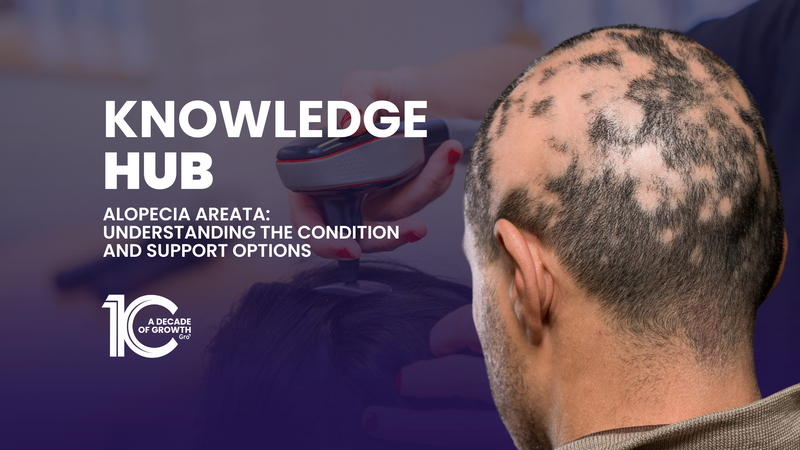
Alopecia Areata is a recognised autoimmune condition that can result in patchy hair loss on the scalp and body. It occurs when the immune system mistakenly attacks hair follicles, disrupting the hair growth cycle. This condition can affect individuals of all genders and ages.
How It Presents
Alopecia Areata can appear suddenly, often as small round patches of hair loss. In some cases, hair regrowth occurs, while in others, hair loss may persist or return intermittently. The condition may affect scalp hair, facial hair, eyebrows, eyelashes, or body hair.
How Common Is It?
Alopecia Areata affects approximately 2% of the population at some point in their lives. It is not contagious, and while the exact cause remains unknown, genetic and environmental factors may contribute to its onset.
The Emotional and Psychological Impact
Hair loss—regardless of type—can impact mental and emotional wellbeing. Individuals experiencing alopecia may report effects on self-esteem, confidence, and social interactions. For some, seeking professional psychological support may be helpful in managing these changes.
What Treatments Are Available?
At present, there is no known cure for Alopecia Areata. Some treatments may be used in clinical settings to encourage regrowth, but results can vary and further research is ongoing.
It’s important to speak with a qualified GP or dermatologist to receive a proper diagnosis and explore potential treatment options suited to your needs.
How Gro Clinics May Support Other Types of Hair Loss
Gro Clinics does not currently offer treatment for Alopecia Areata. However, for individuals experiencing Androgenetic Alopecia (commonly referred to as male or female pattern hair loss), Gro Clinics provides a range of doctor-led procedures and prescription hair care options.
Consultations at Gro Clinics are conducted by a qualified Hair Growth Advisor. Procedures are performed or overseen by registered medical professionals.
Other Forms of Alopecia
- Androgenetic Alopecia: A hereditary condition and the most common cause of progressive hair loss in men and women.
- Telogen Effluvium: Temporary hair shedding often triggered by stress, illness, or hormonal changes.
- Scarring Alopecia: A group of rare disorders causing permanent hair loss through follicle damage.
Next Steps
If you are experiencing hair loss, it’s important to first understand the underlying cause. Begin with a visit to your GP or a qualified dermatologist for an assessment. Once a diagnosis is made, you can explore personalised solutions that may help address your needs.
For individuals with pattern hair loss seeking support, Gro Clinics offers consultations and access to a doctor-led network across Australia and New Zealand, including clinics in: